Tree and Roots. Vector Illustration: A Practical Guide for Designers and Crafters
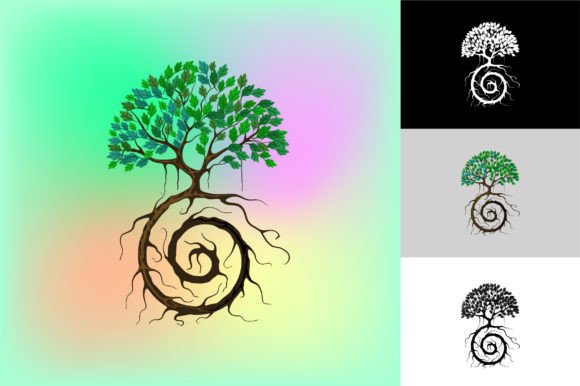
Visual storytelling often relies on symbols that resonate universally, and few motifs are as enduring as the tree. Whether representing growth, stability, family lineage, or environmental consciousness, arboreal imagery is a staple in graphic design. However, the utility of such imagery depends heavily on its technical format and artistic execution. The Tree and Roots. Vector Illustration set offers a specific solution for creators who need versatility without compromising on aesthetic quality. This resource is not merely a static image but a flexible toolkit designed to adapt to various mediums, from digital interfaces to physical merchandise.
Understanding why this specific vector collection stands out requires looking beyond the surface-level artwork. It involves evaluating file compatibility, scalability, and the practical implications of using vector graphics versus raster images in professional workflows. For adults aged 20 to 50 who are managing DIY projects, running small businesses, or working in creative fields, choosing the right asset can save hours of editing time and ensure a polished final product.
The Distinct Advantage of Vector Formats
The primary distinction of the Tree and Roots. Vector Illustration lies in its underlying technology. Unlike JPEGs or PNGs, which are made of pixels, vector files use mathematical equations to define lines and shapes. This fundamental difference means that the image can be resized infinitely without any loss of clarity. A small icon used on a business card can be scaled up to the size of a billboard, and the edges will remain crisp and clean.
This characteristic is particularly valuable when dealing with intricate details, such as the complex root systems found in this illustration set. In a raster image, enlarging fine roots often results in pixelation or blurriness, requiring significant manual cleanup. With the included EPS10 and SVG files, designers can adjust the scale to fit any layout requirement instantly. This scalability makes the set suitable for a wide range of applications, including logo design, large-format printing, and detailed web animations.
Evaluating File Compatibility and Workflow Integration
A common challenge for designers and hobbyists alike is ensuring that their assets work across different software platforms. This download addresses that concern by providing a comprehensive suite of file formats: JPG, EPS10, PNG, and SVG. Each format serves a distinct purpose in the design workflow, and understanding when to use each is key to maximizing the value of the purchase.
- JPG Files: Ideal for quick previews, social media posts, or documents where transparency is not required. They are universally compatible but do not support layers or transparency.
- PNG Files: These include transparent backgrounds, making them perfect for overlaying the tree illustration onto photos, colored backgrounds, or website headers without a white box surrounding the image.
- EPS10 Files: The industry standard for professional print design. Compatible with Adobe Illustrator and other major vector editing tools, these files allow for deep customization of colors, shapes, and line weights.
- SVG Files: Optimized for web use, SVGs are lightweight and code-based. They are essential for responsive web design, ensuring that icons and illustrations look sharp on both mobile devices and desktop screens.
By offering all four formats, the Tree and Roots. Vector Illustration removes the friction of converting files. Users do not need to rely on third-party converters, which can sometimes introduce errors or reduce quality. Instead, they can select the appropriate file type directly from the folder, streamlining the production process.
Comparing Use Cases: Digital vs. Physical Applications
When deciding whether this vector set is the right choice, it is helpful to compare how it performs in digital environments versus physical manufacturing. For digital designers, the editable nature of the vector files allows for seamless integration into UI/UX projects. The clean lines of the olive tree and giant tree variations work well as loading icons, section dividers, or background elements in blog layouts.
In contrast, for those involved in physical crafts and merchandise, the precision of vector paths is critical. Consider t-shirt design or vinyl cutting. Cutting machines require precise vector paths to follow; a pixelated image cannot be cut accurately. The EPS and SVG files in this set provide those clean paths, enabling users to create stickers, decals, and heat-transfer designs with minimal waste. Similarly, for screen printing, vectors allow for easy separation of colors, reducing setup costs and improving print fidelity.
However, there are tradeoffs to consider. While vectors are superior for logos and line art, they may not be the best choice for photorealistic textures. If a project requires a highly textured, painterly look with complex shading, a high-resolution raster photograph might be more appropriate. The Tree and Roots. Vector Illustration excels in stylized, clean, and symbolic representations rather than photorealism. Recognizing this limitation helps users set realistic expectations and choose the right tool for their specific aesthetic goals.
Customization Potential and Creative Freedom
One of the most significant benefits of this resource is its editability. Many stock images come as flattened layers, meaning users cannot change individual components. In this set, the elements are typically organized in a way that allows for modification. Designers can recolor the leaves to match brand guidelines, simplify the root structure for a minimalist logo, or combine the olive tree with other elements to create a unique composition.
This level of control is particularly useful for branding projects. A company focused on sustainability might want to emphasize the roots to symbolize foundation and heritage, while a wellness brand might highlight the branches to represent growth and reach. The ability to tweak these elements ensures that the illustration feels bespoke rather than generic. It transforms a stock asset into a custom design element, adding value to the final product.
Decision Factors: When to Choose This Resource
Choosing the right design asset involves weighing several factors. The Tree and Roots. Vector Illustration is an ideal choice if you prioritize flexibility, scalability, and multi-platform compatibility. It is particularly well-suited for:
- Brand Identity Projects: Where logos need to work at various sizes, from favicons to signage.
- Print-on-Demand Businesses: Where designs must be adaptable to different products like mugs, shirts, and posters.
- Web Developers: Who need lightweight, scalable graphics for responsive sites.
- DIY Crafters: Using cutting machines for home decor or personalized gifts.
Conversely, if you need a quick, one-time use image for a casual social media post and have no intention of editing or resizing it, a free raster image might suffice. Additionally, if your project requires complex, organic textures that mimic oil painting or watercolor, you may need to supplement this vector set with textured overlays or choose a different artistic style entirely.
Final Thoughts on Utility and Value
The Tree and Roots. Vector Illustration represents a balanced investment for creators who value efficiency and quality. By providing multiple file formats and editable vector data, it bridges the gap between amateur DIY projects and professional design standards. It acknowledges that modern creativity often spans both digital and physical realms, requiring assets that can transition seamlessly between them.
Ultimately, the decision to use this set depends on your specific needs for customization and output quality. For those who require crisp lines, infinite scalability, and the freedom to adapt designs to various contexts, this vector collection offers a robust and reliable solution. It empowers users to focus on creativity rather than technical limitations, ensuring that the final result—whether a logo, a t-shirt, or a web banner—meets professional standards.